

Why German Can Be Easier for English Speakers
If you already speak English, you may find German surprisingly familiar.
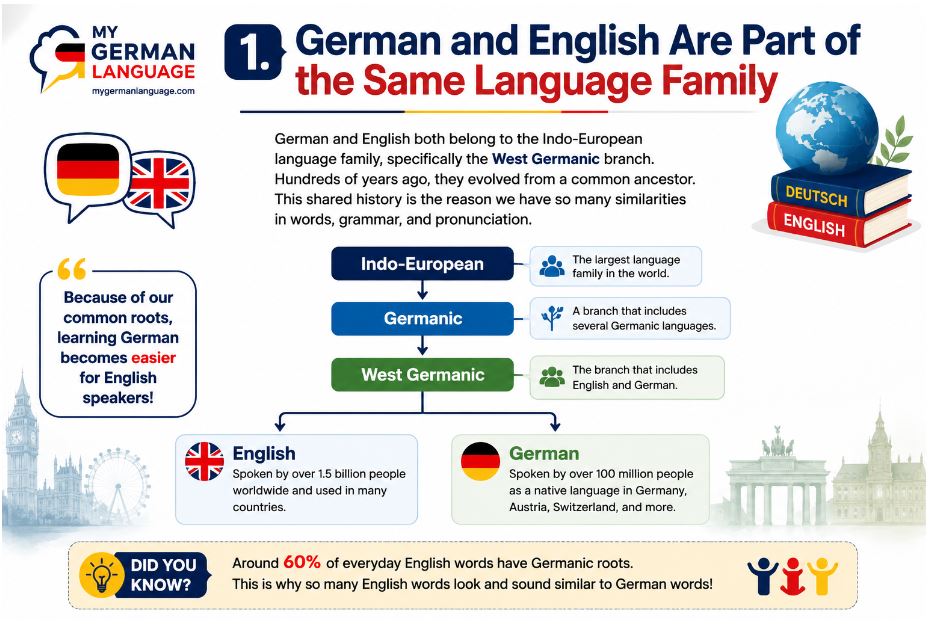
At first, German can look completely different from English. The pronunciation, grammar, word order, and long compound words may seem challenging. However, German and English share something very important: they belong to the same language family.
Both languages are part of the Indo-European language family and, more specifically, belong to the West Germanic branch of the Germanic languages.
This shared linguistic history helps explain why many German and English words have similarities in their vocabulary, pronunciation, and structure.
Did You Know?
A large number of everyday English words have Germanic origins, although the often-quoted percentage can vary considerably depending on how “Germanic roots” and “everyday words” are counted.
This is one reason English speakers may notice familiar patterns when they begin learning German.
For example:
English:
house, hand, father, mother, water, brother, winter
German:
Haus, Hand, Vater, Mutter, Wasser, Bruder, Winter
These similarities are not coincidences. They are traces of the shared history of the two languages.
German May Be Closer to English Than You Think
Learning German does not mean starting completely from zero if you already speak English.
You already have a linguistic advantage.
You may recognize familiar words, understand certain patterns more quickly, and use your existing knowledge of English to create connections while learning German.
But remember:
Similar roots can make German easier to approach — consistent practice is what makes you fluent.
So don’t be afraid of German.
Start with the basics, build your vocabulary, understand the grammar, and most importantly, start speaking from the beginning.
Leave a Reply